
Bedtime Storieswith Biscuit
Cover of The New Neighbor

Bedtime story · Ages 5+ · 6 min read

The New Neighbor

A beaver family has moved to the quiet river. The beaver kit chews sticks, slaps his tail on the water and talks with a whistle, and the little ones whisper that he’s strange. But Tomo the bear cub decides not to whisper, but to ask.

The New Neighbor, illustration 1 of 9
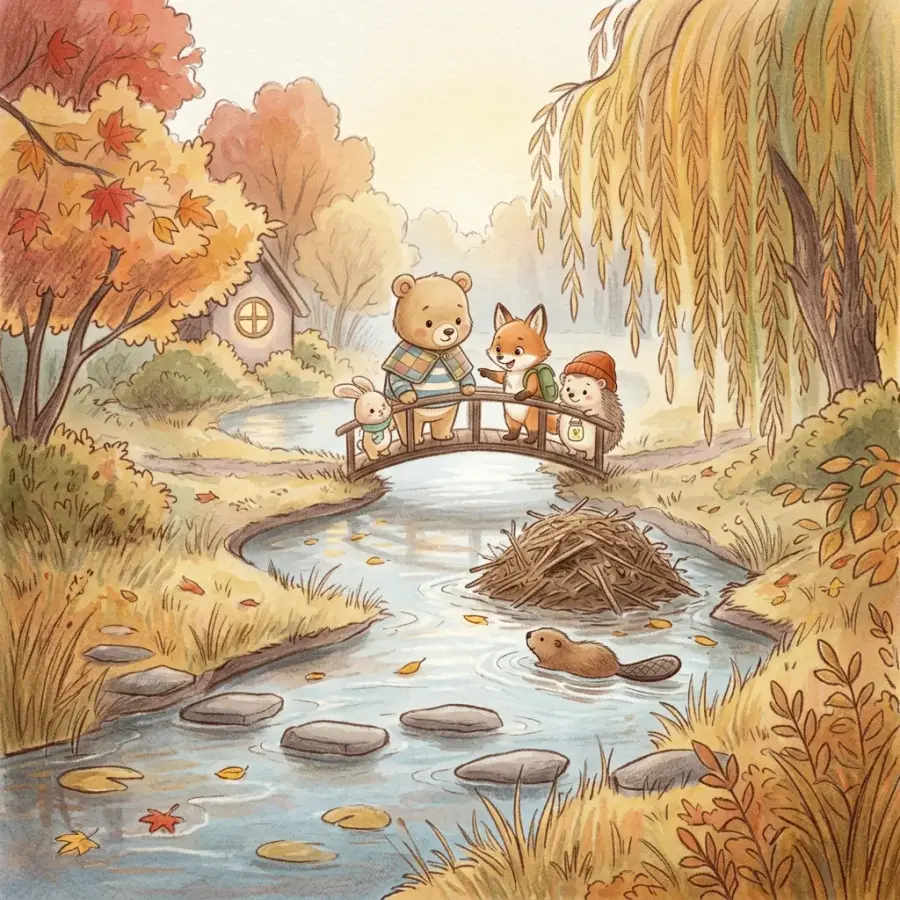
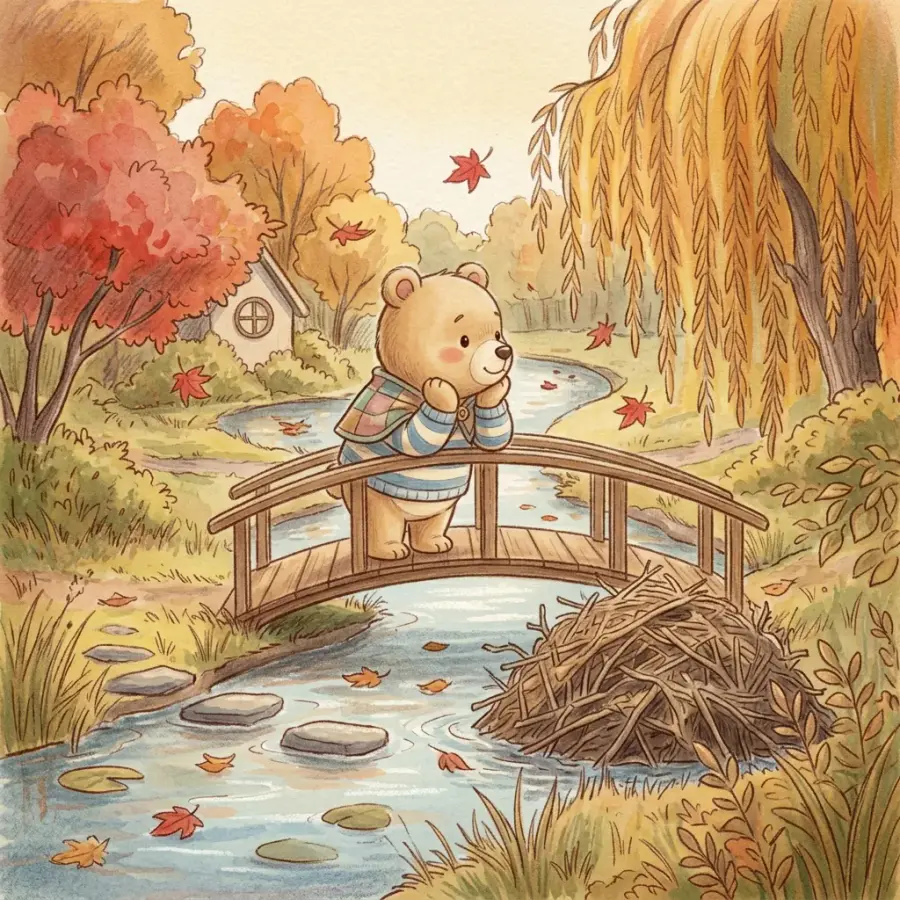
Autumn had come to the forest valley. The maples by the quiet river had turned red, the water was clear and cold, and in the mornings a white mist hung over it. One day, the little ones came to the bridge and saw something new. In the middle of the river, a pile of sticks and branches had appeared — round, like a hat. And next to it, someone brown with a wide, flat tail was swimming in the water. “Those are beavers,” said Fenn. “New neighbors! They’re going to live here now.”
The New Neighbor, illustration 2 of 9
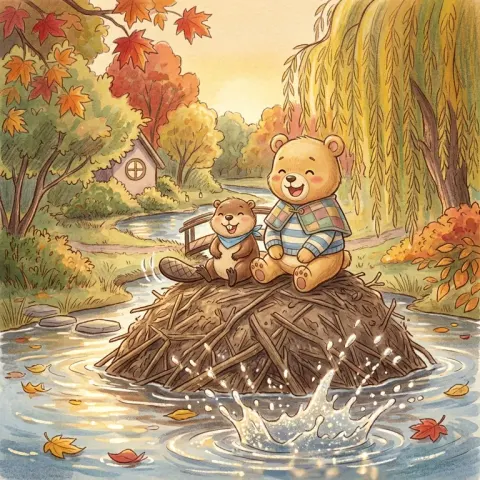
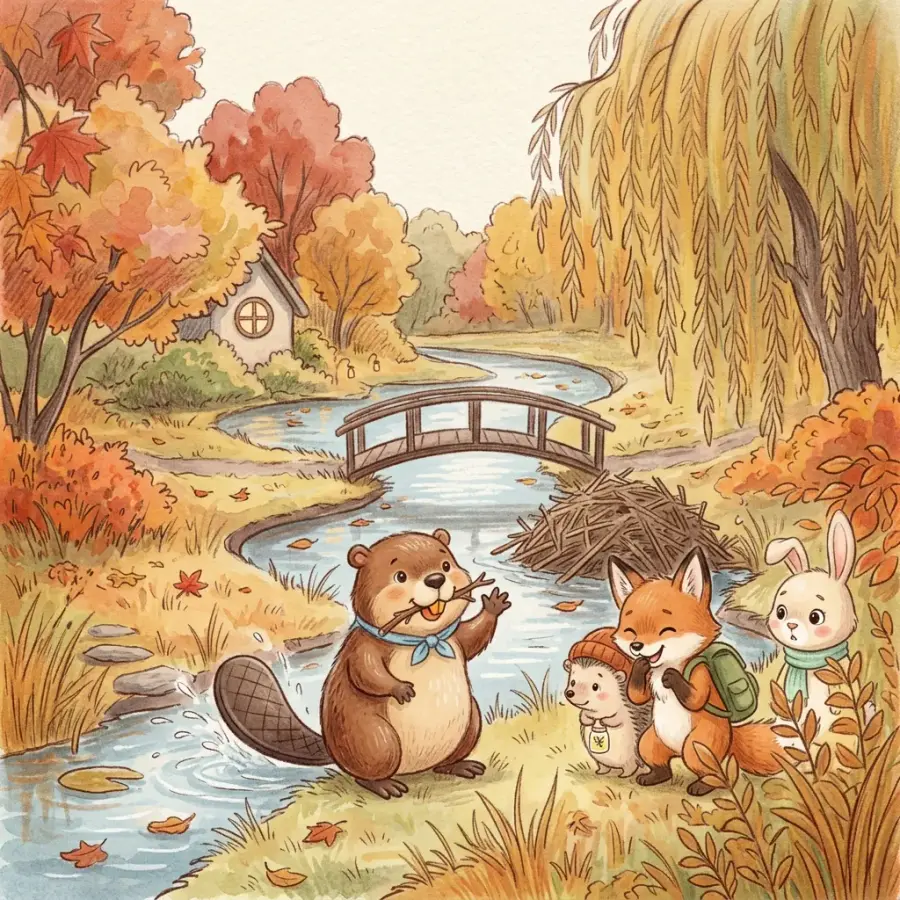
Out of the water climbed a beaver kit — wet and round, with shiny orange teeth. He looked at the little ones, picked up a twig and began to chew it: crunch-crunch-crunch. Then he slapped his tail on the water: slap! Water splashed everywhere. “Whee-hello-whee!” he said with a whistle. And he dived back in. The little ones looked at each other. “He’s chewing sticks,” whispered Mila. “Why?” “He’s splashing,” said Pip, and hid behind Fenn. “And he talks funny,” giggled Fenn. “He’s kind of strange,” they all decided.
The New Neighbor, illustration 3 of 9
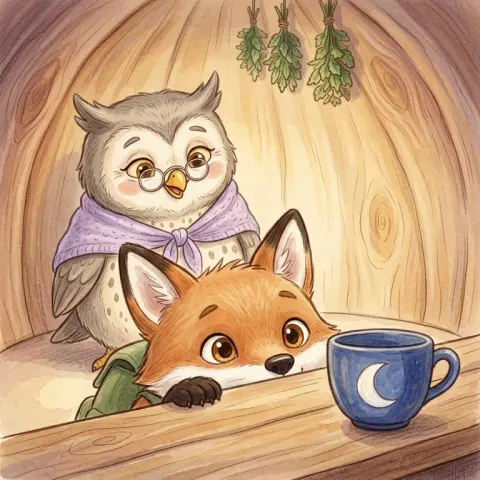
Only Tomo the bear cub didn’t say anything. He stood on the bridge and thought — slowly, as always. When he had moved to the valley as a very little cub, he had been different from everyone too: the biggest, the clumsiest, always dropping things. And it made him sad when others whispered about him. “Different doesn’t mean a stranger,” Granny Owl had told him back then. Tomo remembered that. And he decided, “I won’t whisper. I’ll go and ask.”
The New Neighbor, illustration 4 of 9
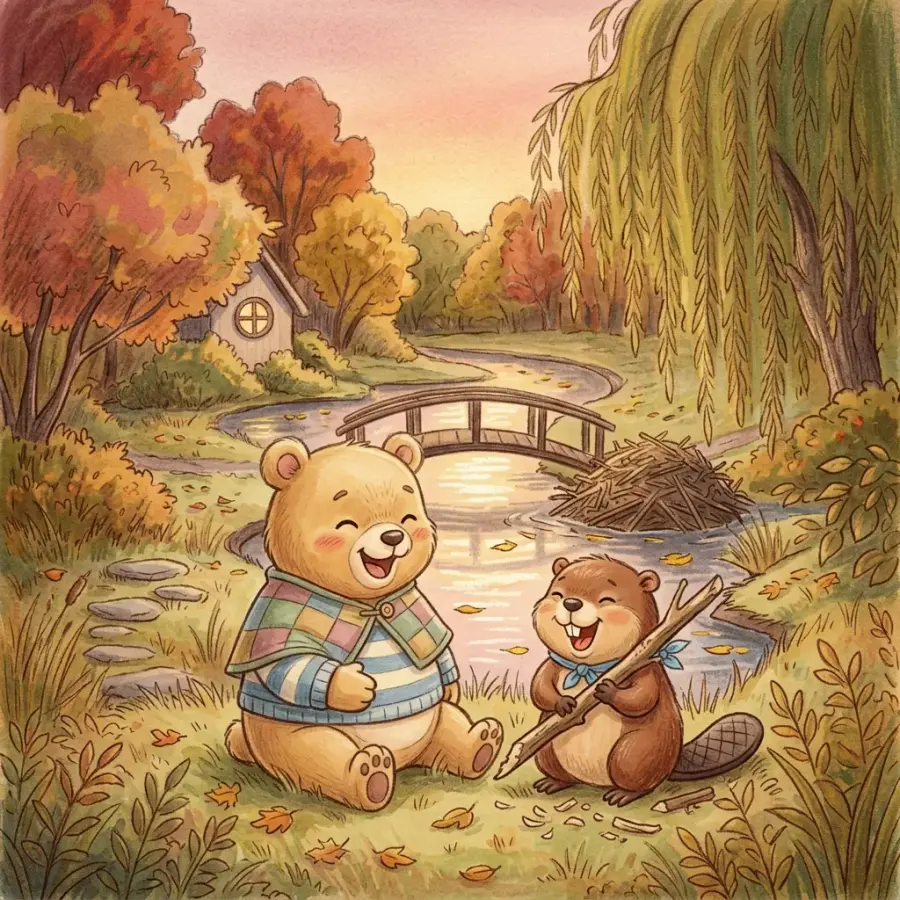
The next evening, Tomo came to the river by himself. The beaver kit was sitting on the bank, chewing a long branch. “Hello,” said Tomo in his deep voice. “I’m Tomo. May I ask you something? Why do you chew sticks?” The beaver kit was surprised that someone had asked. “Whee, I’m building!” he said. “The sticks are the walls of our home. To keep us warm in winter.” “And why do you slap your tail?” “That’s how we say ‘careful’ or ‘I’m here,’” the beaver kit explained. “Yesterday I got scared because there were so many of you, so I slapped it.” “And I thought you were splashing,” said Tomo. And they both laughed.
The New Neighbor, illustration 5 of 9
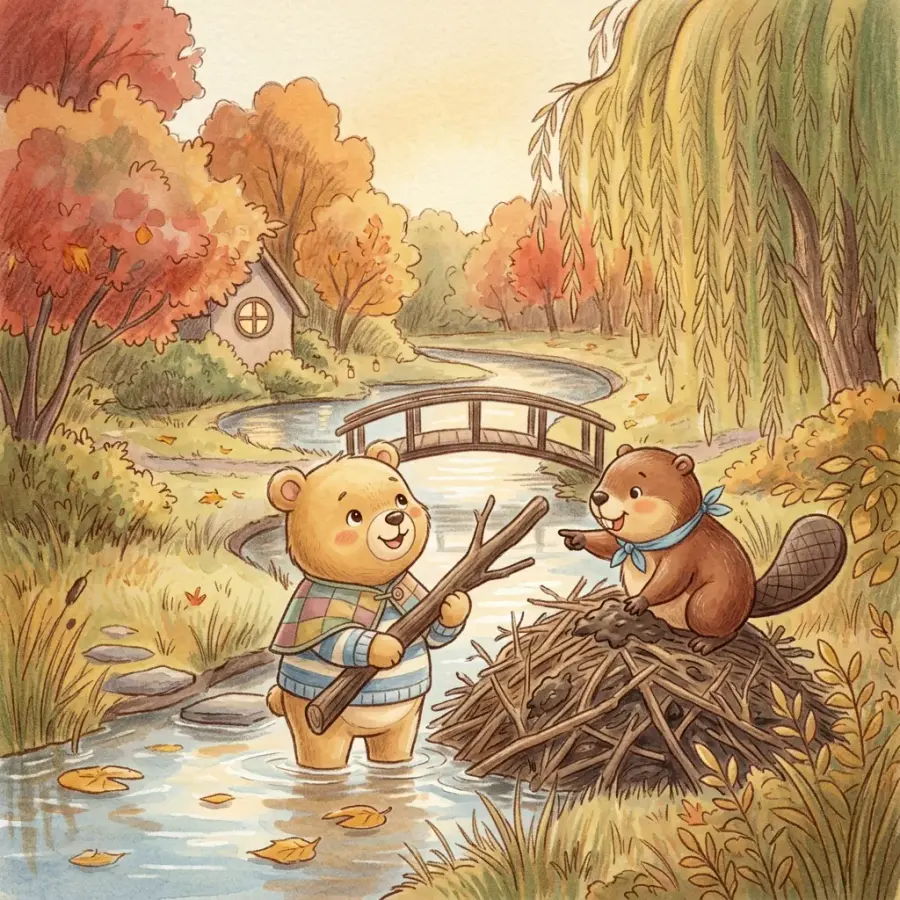
“And I talk with a whistle because I have big teeth,” said the beaver kit. “Mama says that with them you can chew through a whole tree.” “Wow,” said Tomo. He was terribly curious now. “May I help you build?” The beaver kit was so happy that he slapped his tail for joy: slap! Tomo is big and strong — he carried the thickest branches. And the beaver kit showed him where to put them and filled the cracks with river mud. The lodge grew round and sturdy.
The New Neighbor, illustration 6 of 9
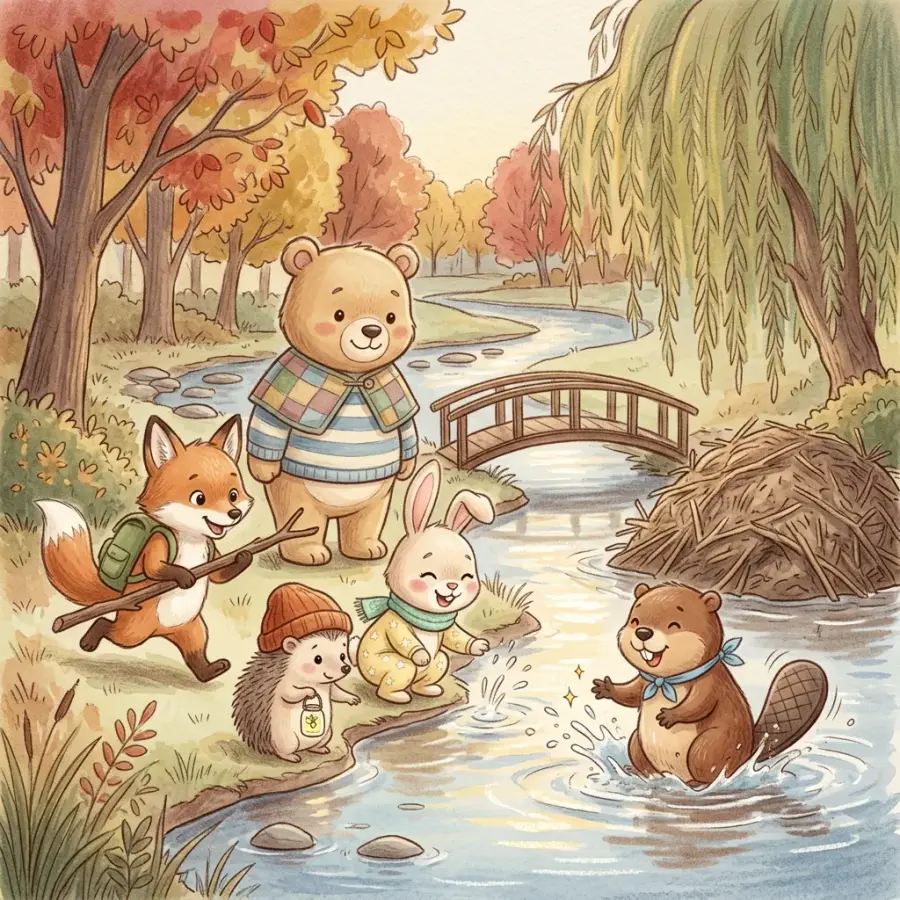
Fenn, Mila and Pip came to the bridge to see where Tomo had gone. They saw Tomo and the beaver kit building a home together. “He’s not strange,” Tomo told them. “He’s a builder. And he says hello with his tail.” The beaver kit felt shy and gave a little slap: slap. Mila slapped back on the water with her paw. Pip thought about it — and did it too. Fenn laughed and brought the longest branch. Different doesn’t mean a stranger. Soon all the little ones were carrying sticks, and the beaver kit was teaching them his slappy “hello.”
The New Neighbor, illustration 7 of 9
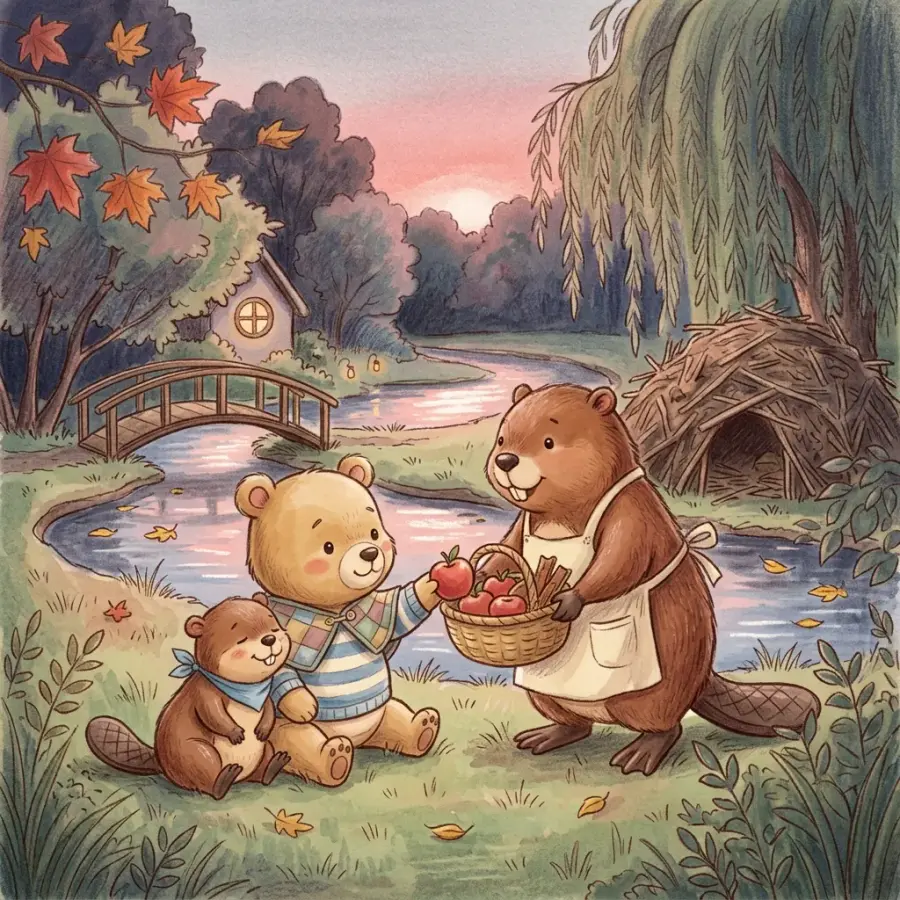
The sun sank behind the maples, and the river turned pink, and then silver. The beaver lodge was finished. Mama Beaver climbed out of the water and treated the little ones to sweet bark and apples. “Thank you, neighbors,” she said. The beaver kit sat beside Tomo, and you could see he didn’t feel lonely anymore. “When do you beavers sleep?” asked Tomo. “In the daytime,” said the beaver kit. “And at night we work. That’s just how we do things.” Different doesn’t mean a stranger.
The New Neighbor, illustration 8 of 9
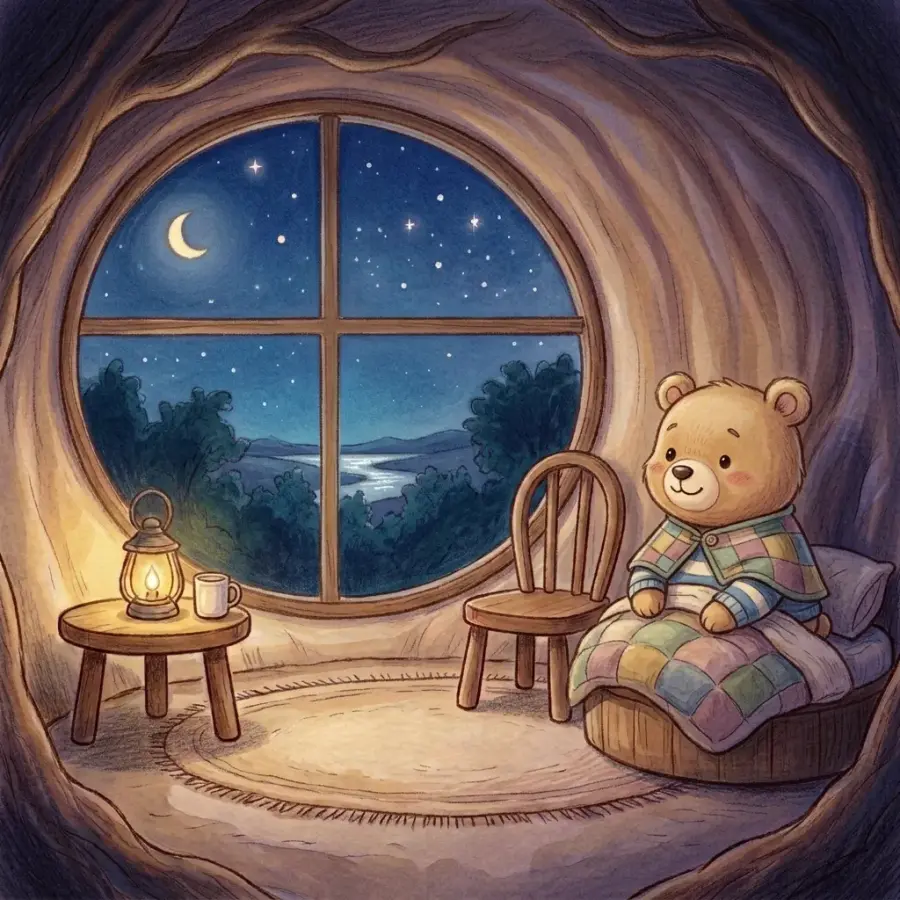
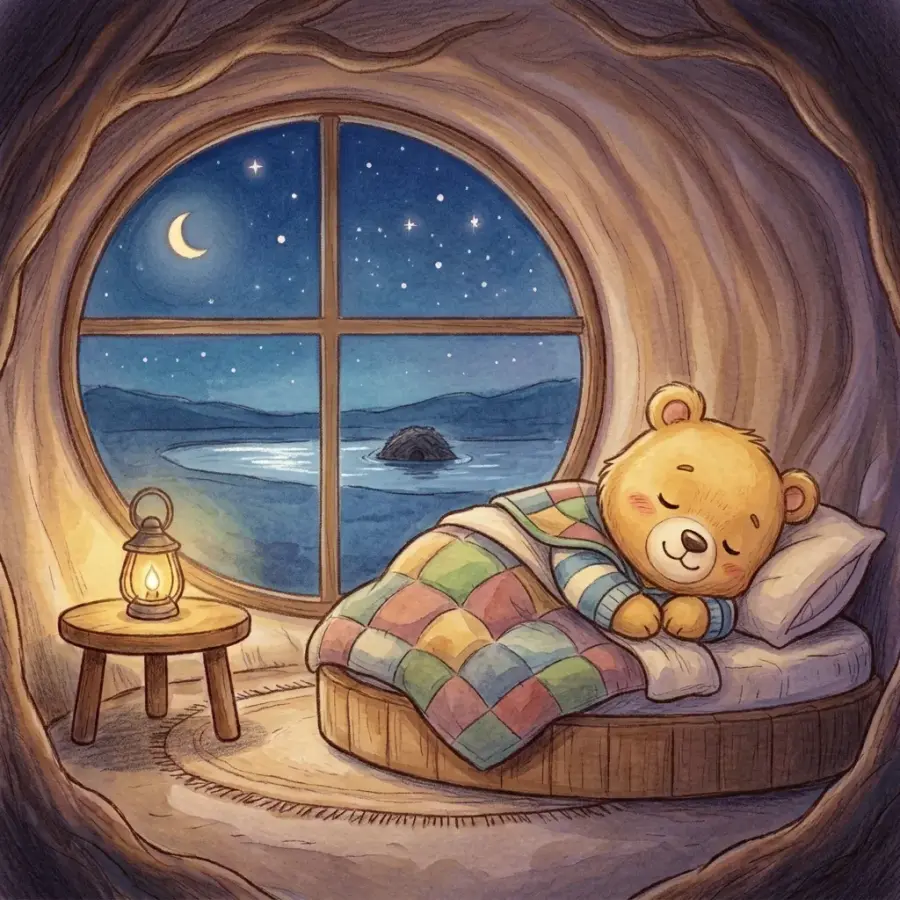
The little ones went home. In the village, the round windows were lighting up. Tomo drank his warm milk, wrapped himself in his patchwork cape and got into bed. The night was very quiet. Only from far away, from the river, came: tap… crunch… slap… It was the beaver kit working in the dark — finishing his lodge. Before, that sound would have seemed strange to Tomo. But now he knew it was his neighbor.
The New Neighbor, illustration 9 of 9
Tap… crunch… slap… The sounds were slow and calm, like a ticking clock. Tomo listened and thought: somewhere out there, his new friend is laying twig upon twig, so his family will be warm in winter. And tomorrow they’ll meet again at the bridge. Tomo’s eyes grew heavy. Slap, said the river. “Good night, neighbor,” Tomo whispered. Different doesn’t mean a stranger… Good night, Tomo.

The end.

Questions

How long does The New Neighbor take to read aloud?

About 6 minutes at a calm bedtime pace, across 9 short pages.

What age is The New Neighbor for?

Ages five and up. A gentle story written for bedtime, so it works as a last story before sleep.

Can my child listen to The New Neighbor instead?

Yes. In the Bedtime Stories with Biscuit app, Biscuit reads it aloud, each word lights up as it is read, and the pages turn by themselves.

More stories to read tonight