
SHORT ANSWER
Calm stories for sleep move slowly, repeat gently and end quietly, often with a character falling asleep. They avoid chases, cliffhangers and loud surprises. Read them in a soft, slowing voice, keep the lights low, and choose the same few favorites often: familiarity is one of the most calming things a story can offer.
Some stories wind children up. Others wind them down. At bedtime, you want the second kind: stories that move gently, make few demands, and leave a child feeling safe and sleepy by the last page.
This guide explains what makes a story calming, how to read for sleep, and offers a list of gentle stories that end quietly.
What makes a bedtime story calming
Calm stories for sleep share a handful of qualities.
A slow pace. Not much happens, and it happens slowly. A walk, a look at the stars, building a den, listening to rain. There is time on every page.
A gentle problem, or none at all. A small worry that softens, a little puzzle that gets solved. No danger, no villains, no race against time.
Repetition. Counting, a repeated line, a sequence of similar scenes. Repetition lets the mind relax because it knows what is coming.
Sensory detail. Soft blankets, warm light, the sound of rain, the smell of bread. These details invite a child to imagine being cozy too.
A settling ending. The best calm stories end with characters going home, curling up, or falling asleep. The story itself models what you hope your child will do next.
What to avoid at bedtime
These elements are wonderful in daytime stories, but tend to keep children awake:
- chases, races and escapes;
- cliffhangers or endings that leave a question open;
- loud surprises, jokes that make children jump up and act them out;
- big villains or frightening transformations;
- long, complicated plots with many characters.
None of these make a story bad. They just make it a better fit for the afternoon.
How to read for sleep
The same story can be calming or lively depending on how you read it.
- Lower the lights before you start. A dim lamp or a night light is enough.
- Read slower than feels natural. Pause between sentences and between pages.
- Let your voice get quieter as you go. The last page should be almost a whisper.
- Breathe slowly yourself. Children often match the breathing of the person next to them.
- Keep the ending slow. Let the last line sit for a moment before you close the book.
If your child is drifting off, there is no need to finish dramatically. A soft “the end” and your usual goodnight words are enough.
Calming bedtime stories to try tonight
These stories are slow, gentle and quiet at the end. The first ones suit ages two and up. The last ones are slightly longer, for five and up. In the app, Biscuit reads each one aloud in a calm voice, the words light up as they go, and the story simply ends with no autoplay.
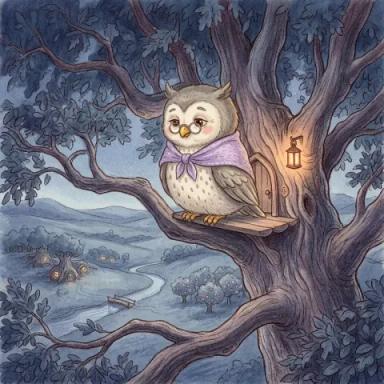 1. AGES 2+ · 4 MINHow the Valley Falls AsleepGranny Owl flies over the valley and watches everyone settle down in their own way. Each little scene is quieter than the last, which makes it a natural last story of the night.Read the story here →
 2. AGES 2+ · 3 MINMila Counts the StarsA wide-awake bunny counts the summer stars one by one. The slow counting gives a child something calm to follow until their own eyes feel heavy.Read the story here →
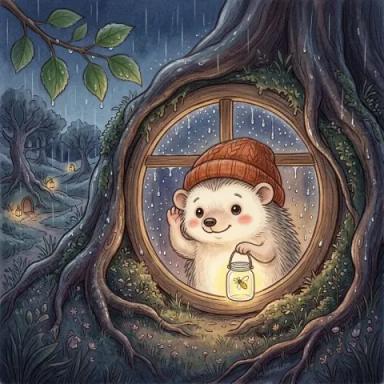 3. AGES 2+ · 4 MINPip Listens to the RainThe first spring rain keeps Pip awake, so he listens to each sound in turn. It quietly teaches a trick many kids can use: name the sounds, then let them fade.Read the story here →
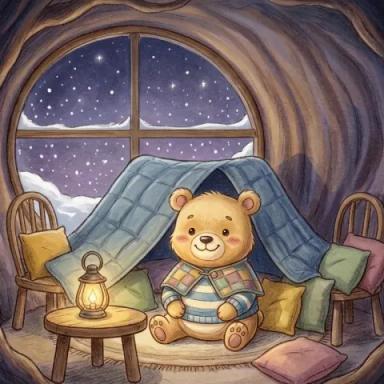 4. AGES 2+ · 4 MINTomo Builds a DenTomo the bear cub builds his first blanket den, one careful step at a time. It mirrors a bedtime routine: small steps, done in order, end somewhere cozy.Read the story here →
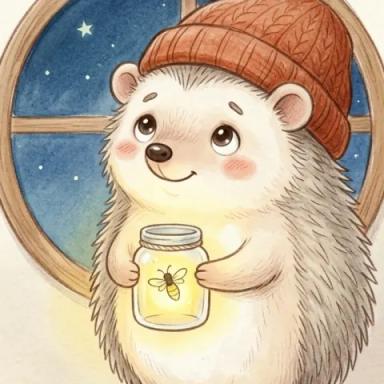 5. AGES 2+ · 4 MINPip and the Firefly LanternPip the hedgehog is nervous about the dark until Granny Owl shows him what the night really holds. A gentle way to talk about bedtime fears without making them bigger.Read the story here →
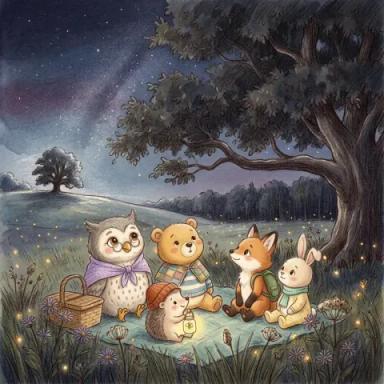 6. AGES 5+ · 7 MINThe Night Walk to the FirefliesGranny Owl leads the little ones on their first night walk to the firefly meadow. A slow, curious look at the night that helps the dark feel friendly.Read the story here →
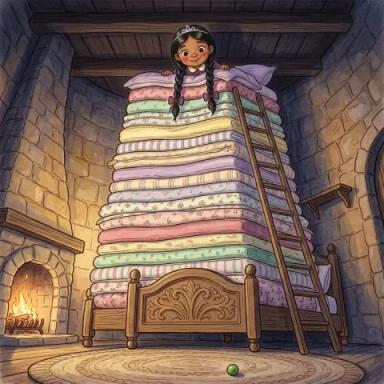 7. AGES 2+ · 4 MINThe Princess and the PeaA rainy-night visitor, a tower of mattresses and one tiny pea. The classic princess fairy tale is all about beds and sleeping, which makes it a fitting bedtime pick.Read the story here →
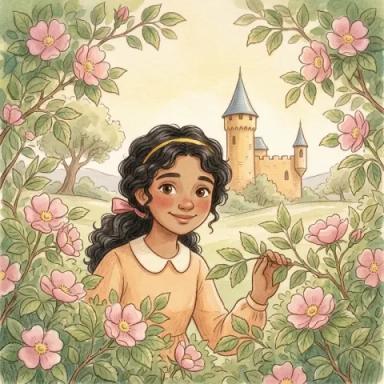 8. AGES 5+ · 7 MINSleeping BeautyA princess, a long enchanted sleep and a kind fairy who makes it peaceful. A calm princess fairy tale where the long sleep is gentle rather than scary.Read the story here →
Why these stories are good for sleep
How the Valley Falls Asleep is a sleepy story through and through: each scene is quieter than the last, until the whole valley is asleep. Mila Counts the Stars uses counting, which slows breathing and attention. Pip Listens to the Rain teaches a gentle trick for noisy nights: listen to each sound, one at a time, until they fade.
Tomo Builds a Den goes step by step, a lot like a bedtime routine, and ends somewhere cozy. Pip and the Firefly Lantern takes the fear out of the dark. The Night Walk to the Fireflies is a little longer and gives older children a slow, wondering look at the night.
The two classics are both, in a sense, about sleep. The Princess and the Pea is a story about a bed. And this gentle retelling of Sleeping Beauty makes the long sleep peaceful rather than frightening.
Calm stories you can tell from memory
Some of the calmest bedtime stories need no book at all. A few ideas:
- The goodnight walk. Describe a slow walk through a familiar place, like your home, a park or grandma's garden, saying goodnight to everything you pass.
- The sleepy animals. Tell how each animal in a forest or a farm gets ready for bed: the bird in its nest, the rabbit in its burrow, the bear in its den. End with your child in their own bed.
- The cloud boat. A small boat drifts slowly across a calm lake or a sky of soft clouds. Nothing happens. That is the point.
Invented stories like these are easy to stretch or shorten, and you can make them as slow as you like.
Familiar stories are the calmest
It is tempting to look for something new every night, but for sleep, familiar often beats new. A story your child knows well asks nothing of them: no surprises, no new characters to keep track of. They can simply listen and let go.
Keep two or three calm favorites in rotation, and bring in new stories on evenings when your child is more rested.
Building a calm storytime
A calm story works best inside a calm routine. A few things help:
- Keep screens and loud play earlier in the evening.
- Read in the same place every night, ideally in bed with the lights low.
- Agree on the number of stories before you start.
- Finish with the same goodnight words.
If you use an app for the bedtime story, choose one that dims the screen, reads at a gentle pace and does not roll into another story when one ends.
When calm stories do not seem to work
Some children fight sleep no matter what you read. If that happens, look at the whole evening rather than the story:
- Is bedtime too late? Overtired children often get a second wind.
- Is the last hour busy or bright?
- Is something worrying your child, like a new school or a new sibling?
Sometimes moving bedtime earlier by fifteen minutes, or adding a few minutes of quiet one-on-one time before the routine, makes the story itself much more effective.
Putting it together
Calm stories for sleep are slow, gentle and repetitive, and they end with things settling down. Read them in a soft, slowing voice, in a dim room, at the same point in your routine each night. Choose favorites often, because a familiar calm story is one of the most reliable sleep cues a child can have.
Questions
What makes a bedtime story calming?
A slow pace, a gentle problem, repetition, and an ending where things settle down. Stories where characters get sleepy or go home are especially good.
Are sleep stories the same as bedtime stories?
Sleep stories are bedtime stories written to help a listener drift off: very slow, very gentle, with little plot tension. Many classic bedtime stories work the same way.
Should my child fall asleep during the story?
It is fine if they do, but it is not the goal every night. Many families prefer to finish the story and leave while the child is drowsy but awake.